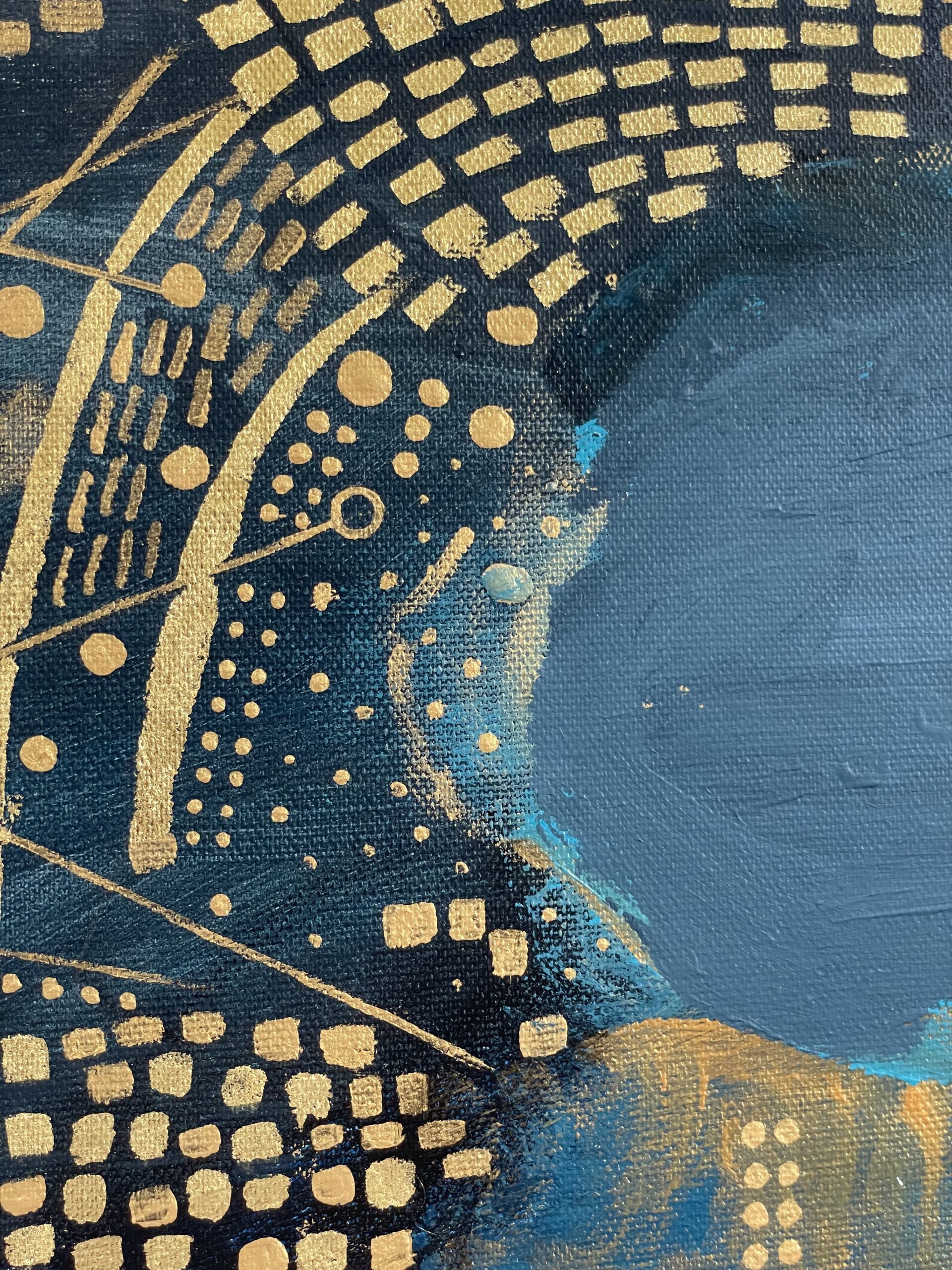
« Entre héritage et futurisme : descendante de l’artiste qui a immortalisé Nikola Tesla, je poursuis aujourd’hui ce dialogue avec l’énergie et la structure à travers mes circuits imprimés. »
Who’s Natacha Ivaldi ?
____________________
« As the descendant of the artist who painted the iconic portrait of Nikola Tesla, I weave a dialogue between historical heritage and digital innovation. My work explores the intersection of human energy and technological structure, transforming the cold aesthetics of circuitry into a vibrant, visionary language. »
After earning a Master’s degree in Art History from La Sorbonne, she chose to follow in the footsteps of her ancestor, Princess Vilma Lwoff-Parlaghy—the renowned portraitist of Nikola Tesla, Theodore Roosevelt, and Emperor Wilhelm II (among others). This extraordinary family legacy remains a profound source of inspiration today.
Natacha’s artistic direction took a decisive turn following the sudden passing of her father, a researcher in technological innovation. In a poignant tribute to his life’s work, she embraced the visual language of printed circuits.
Fascinated since childhood by the golden paths meandering across motherboards, she integrates these components into her paintings to decipher their mysteries and make them her own.
Her work is an invitation to contemplation and introspection. Each canvas explores the depths of human emotion, questioning the meaning of life and the place of the subconscious in modern society. These golden connections become paths for the viewer to interpret, facilitating a true inner journey.
———————————
The Legacy of Vilma Parlaghy :
Born Natacha Nors Ivaldi, she carries the family name of her great-grandmother, Wilhelmina Nors, daughter of Princess Vilma Lwoff-Parlaghy.
After more than a decade of research dedicated to her ancestor’s life, Natacha co-initiated the German centenary exhibition in honor of the Princess in Germany.
As the guest of honor, she delivered an inaugural speech in German at the NordseeMuseum Nissenhaus Husum, which holds a significant collection of Parlaghy’s works, including the world-famous « Blue Portrait » of Nikola Tesla.
On this occasion, the museum director invited Natacha to exhibit her own work: “In Memory of Vilma Parlaghy for her Centenary” (2023), a 120 x 160 cm diptych that is now part of the museum’s collections.
Natacha’s commitment to this legacy continues through the @VilmaParlaghy_official archive, which she founded in 2023. Her journey has taken her to New York to visit Woodlawn Cemetery in the Bronx, and she was privately received at the Harvard Club of New York City to study the portrait of its former president, Thomas Slocum. She also explored the remains of the Princess’s legendary penthouse suite at The Plaza Hotel.
Today, Vilma’s story lives on through Natacha’s brush.
It is both an honor and a responsibility to ensure that this historic name regains the global recognition it deserves.
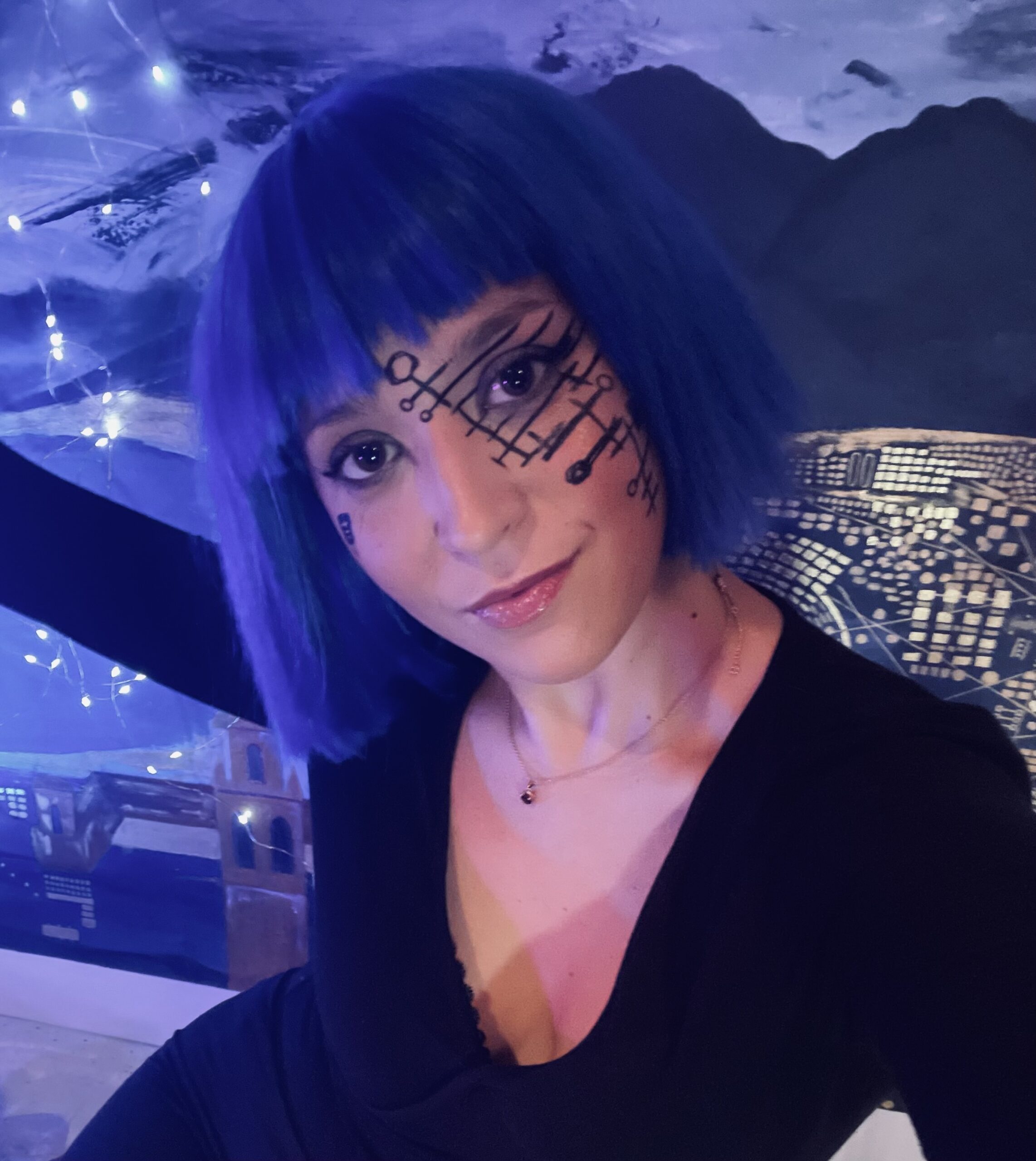
Biographie de Natacha Ivaldi
Natacha Ivaldi est une artiste peintre française qui s’est formée à la peinture en atelier à travers des reproductions dès son plus jeune âge.
Après avoir obtenu un Master en Histoire de l’Art à La Sorbonne, elle a décidé de suivre les traces de son ancêtre peintre, la princesse Vilma Lwoff-Parlaghy, dont l’histoire incroyable l’inspire aujourd’hui encore.
C’est à cette période que le visuel des circuits imprimés s’est présenté à elle comme une évidence, puisqu’elle coïncidait avec la disparition soudaine de son père chercheur en innovation technologique à qui elle a voulu rendre hommage dans son art.
Depuis son enfance, Natacha éprouve une fascination pour ces petits composants et la façon dont les connexions dorées se promènent sur les cartes mères.
Les intégrer à ses peintures est alors devenu pour elle une manière de se les approprier et de tenter d’en décrypter les mystères.
Ses peintures sont à la fois une invitation à la contemplation, à l’introspection et à la réflexion, car chaque toile met en avant des ressentis et des questionnements humains sur le sens de la vie, la société actuelle ou encore la place de nos émotions et de notre inconscient dans nos vies.
Les connexions dorées sont des chemins que nous pouvons interpréter à travers notre propre regard, nous permettant ainsi d’effectuer un véritable voyage intérieur.